Best UV400 Sunglasses: How To Choose The Right Pair
Share
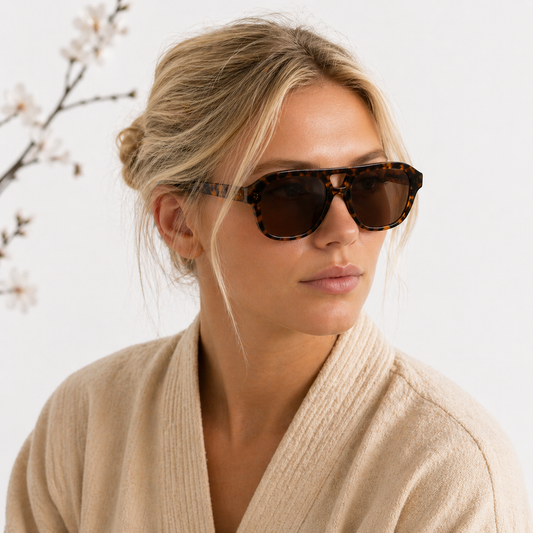
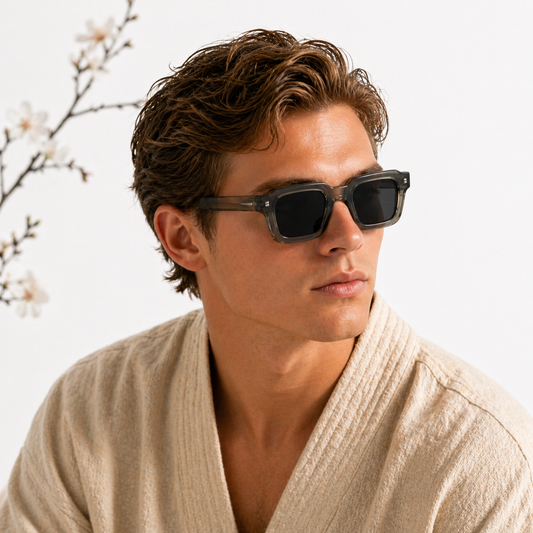
Choosing the best UV400 sunglasses is about more than style. UV400 protection blocks 100% of harmful UVA and UVB rays up to 400 nm, helping prevent long-term eye damage while keeping vision comfortable in bright conditions. Below you’ll find concise, practical guidance to buy with confidence.
Not sure where to start? Our Minimalist UV400 sunglasses picks offer a curated, timeless look.
What UV400 actually means
UV400 indicates that the lenses block all ultraviolet radiation up to 400 nanometers - effectively 100% of both UVA and UVB. This is the gold standard for everyday eye safety in sunlight. Lens darkness does not equal UV protection. Clear lenses can offer 100% UV protection, while very dark lenses without proper UV filtering can dilate your pupils and increase UV exposure.
How to verify real protection:
- Look for markings such as UV400 or 100% UV protection.
- Check for a legitimate CE mark indicating conformity to European safety requirements.
- Avoid vague phrases like UV absorbent or cosmetic lenses without explicit UV400 or 100% UV claims.
- Buy from reputable sellers and inspect lenses for optical clarity - distorted vision can cause eye strain.
Who benefits most from strict UV protection? Everyone - but especially children, people at high altitude, near water or snow, and those spending extended hours outdoors. UV damage is cumulative, so consistent use matters.
Want more guidance? Visit Sunglasses tips & news for in-depth articles on UV400, CE marks and buying tips.
CE filter categories explained
CE filter categories describe how much visible light a lens lets through. They do not indicate UV protection by themselves - a UV400 lens can exist in multiple categories. Use the table to match categories to common use cases.
| CE cat. | Visible light transmission | Typical use | Notes |
|---|---|---|---|
| 0 | 80-100% | Indoor, evening | Not for bright sun |
| 1 | 43-80% | Overcast | Mild brightness only |
| 2 | 18-43% | Changeable weather | Moderate sun |
| 3 | 8-18% | Bright sun, daily wear | Go-to for beach, city |
| 4 | 3-8% | Extreme glare - glaciers, high mountains | Not safe for driving |
Ready for bright days? Explore the Summer sunglasses collection to find CE 3 UV400 styles built for sunny conditions.
Polarized vs UV400 - which is better?
They do different jobs. UV400 blocks harmful ultraviolet rays - this is essential. Polarized lenses cut blinding horizontal glare from water, snow and roads, improving comfort and contrast. The best choice for harsh glare is UV400 plus polarization. If you rarely face glare, UV400 alone is sufficient. Note that some car windscreens and device screens may show mild rainbow effects with polarized lenses.
For deeper dives into lens tech, coatings and real-world comfort, explore our Journal.
Lens colors and when to use them
Color affects how you see, not UV safety. Choose based on environment and preference:
- Grey - neutral and true-to-color, ideal for bright sun and daily wear.
- Brown/amber - boosts contrast and depth perception, great for driving and mixed conditions.
- Green - balanced brightness and contrast, classic all-rounder.
- Yellow/light amber - enhances contrast in low light or overcast days - not for midday sun.
- Mirror coatings - reflect extra light for comfort; they do not change UV protection.
Prefer lighter tints or variable weather? Browse the Spring sunglasses collection for contrast-boosting UV400 options.
Fit, face shape and sizing for all-day comfort
Face shape pointers
Use these quick guidelines as a starting point - comfort and coverage come first.
- Round face - angular frames like square or rectangular add definition.
- Square face - round or oval frames soften strong lines.
- Oval face - most styles work; match frame width to your face width.
- Heart-shaped - bottom-heavy or rounded styles balance a wider forehead.
- Long/rectangular - larger, taller lenses add visual balance.
Sizing and coverage tips
- Match frame width to your temple width - no pinching or gaps.
- Bridge fit should be secure without sliding or pressure points.
- Temple length should sit comfortably over ears, not pressing.
- Coverage matters - a slightly wrapped shape blocks side light and wind.
- For sports, consider rubberized nose pads and temples for grip.
Care tips to keep UV400 lenses performing
- Rinse off dust and salt with lukewarm water before wiping.
- Use lens cleaner and a microfiber cloth - avoid shirts and paper towels.
- Store in a hard case to prevent scratches and heat damage.
- Keep away from dashboards and saunas - extreme heat can warp lenses and coatings.
- Check and tighten screws or spring hinges periodically.
FAQs
Is a UV400 sunglass good?
Yes. UV400 equals 100% UVA and UVB protection up to 400 nm, the benchmark recommended for eye safety. Pair UV400 with a suitable CE category - usually CE 3 for bright sun - and ensure a secure, comfortable fit for reliable, all-day protection.
Which is better - polarized or UV400?
UV400 is non-negotiable for health. Polarization is an optional performance upgrade that cuts glare from water, snow and roads. The ideal setup for harsh glare is UV400 plus polarized lenses. If you seldom face glare, UV400 alone is perfectly fine.
What are the best quality sunglasses?
Look for UV400 or 100% UV protection, a genuine CE mark, optical-grade lenses with minimal distortion, durable hinges, scratch-resistant coatings, comfortable coverage and a clear warranty from a reputable seller.